Skip to content

A landmark on the Orontes

Al-Nouri Mosque

Mosque of Nur al-Din al-Shahid · Hama

More than eight centuries of prayer and learning in the heart of old Hama. A minaret of black and white stone, and a courtyard pool once fed by the norias.

Founded (558 AH)
1163
Founder
Nur al-Din
On the river bank
Orontes
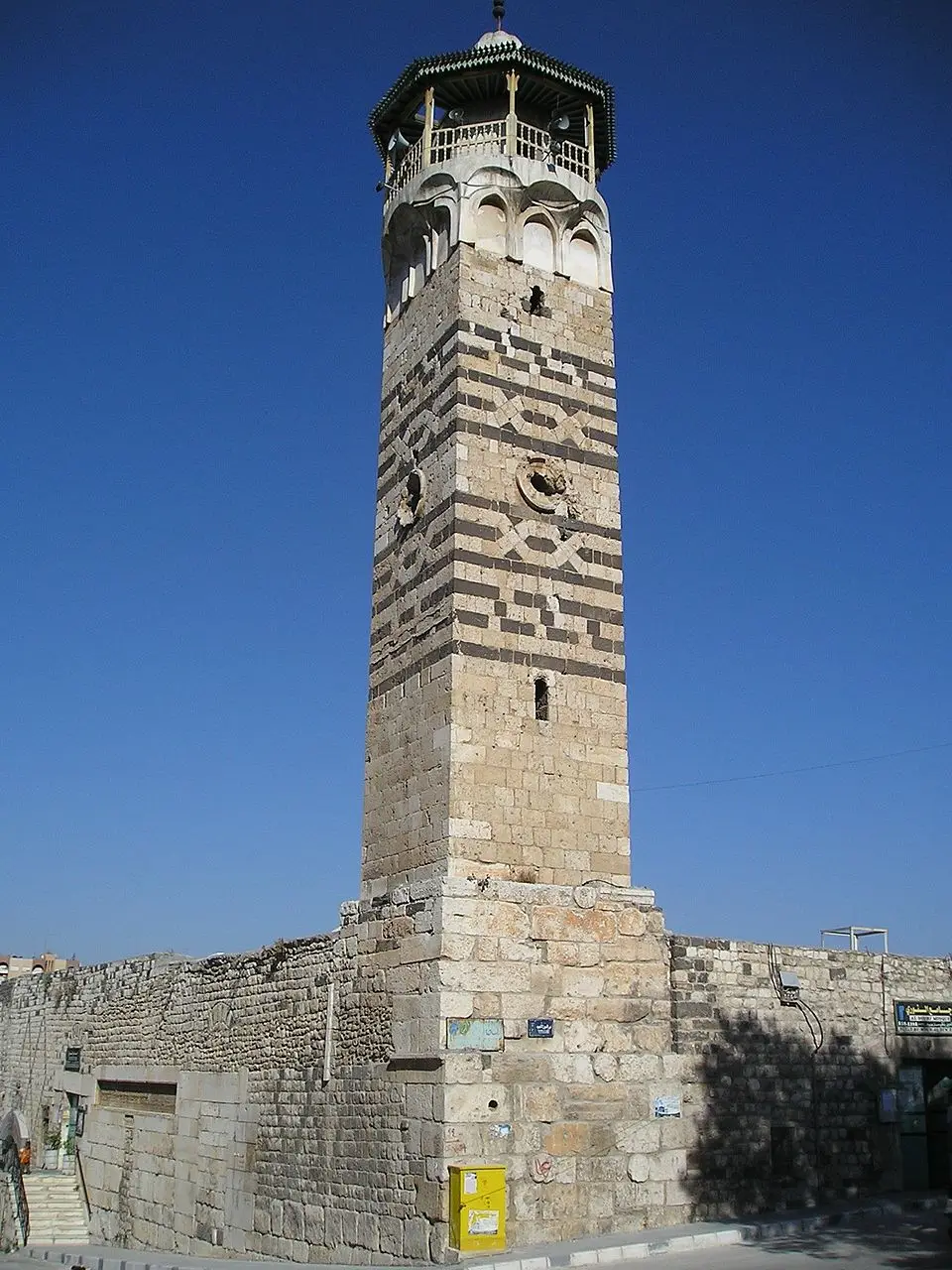
The square minaret of Al-Nouri Mosque with its dark and light stone courses

About

The Story of Al-Nouri Mosque

A look at the mosque's history and distinctive architecture.

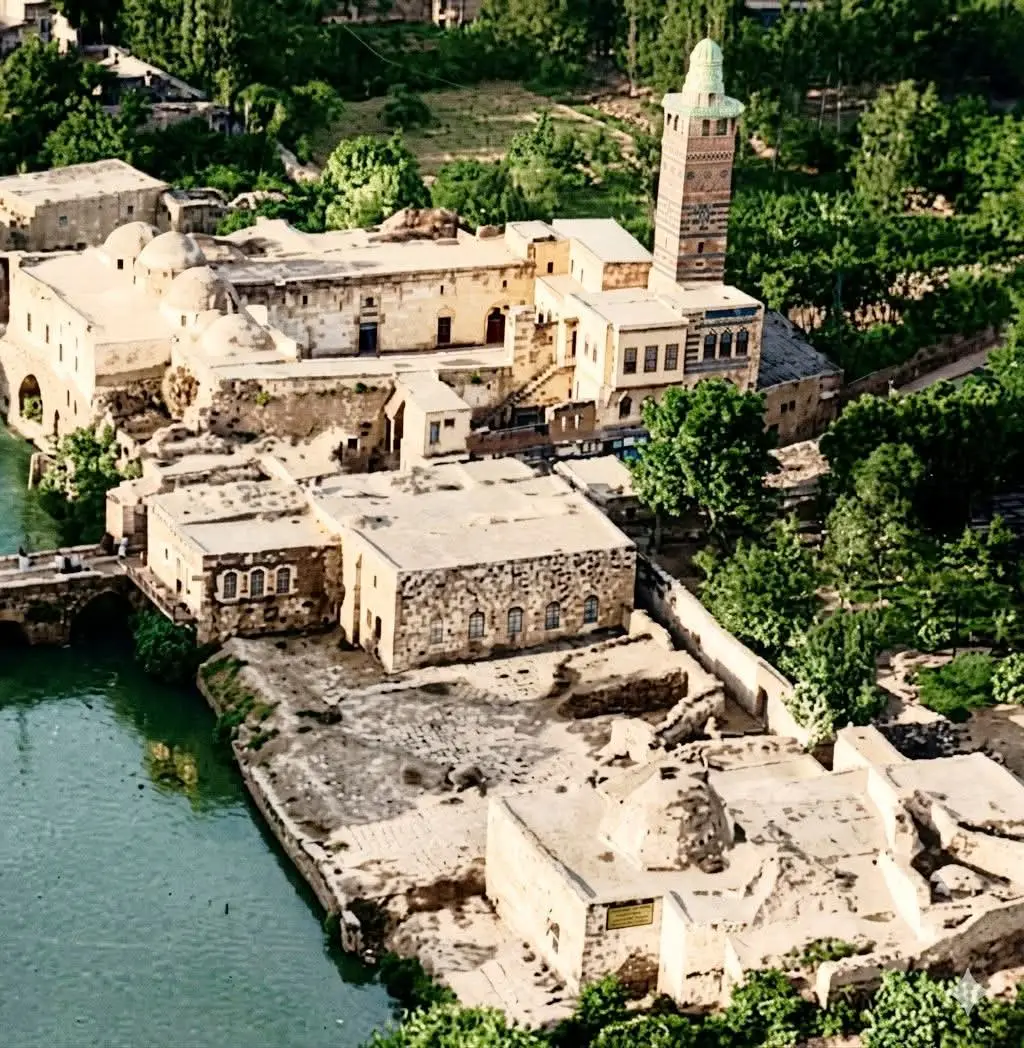
Aerial view of Al-Nouri Mosque and its surroundings on the Orontes

Historical Overview

Al-Nouri Mosque, also known as the Mosque of Nur al-Din al-Shahid, was built under Sultan Nur al-Din Mahmoud Zengi. The foundation inscription on its north wall dates its construction to 558 AH (1162–1163 CE). It stands on the site of an old monastery known as Dayr Qizma, on the west bank of the Orontes near the Hama citadel. Nur al-Din had restored what the great earthquake damaged in the city, and in 1164 he built a bimaristan (hospital) beside the mosque. The eastern section overlooking the river was added later under Abu al-Fida, and was originally a madrasa.
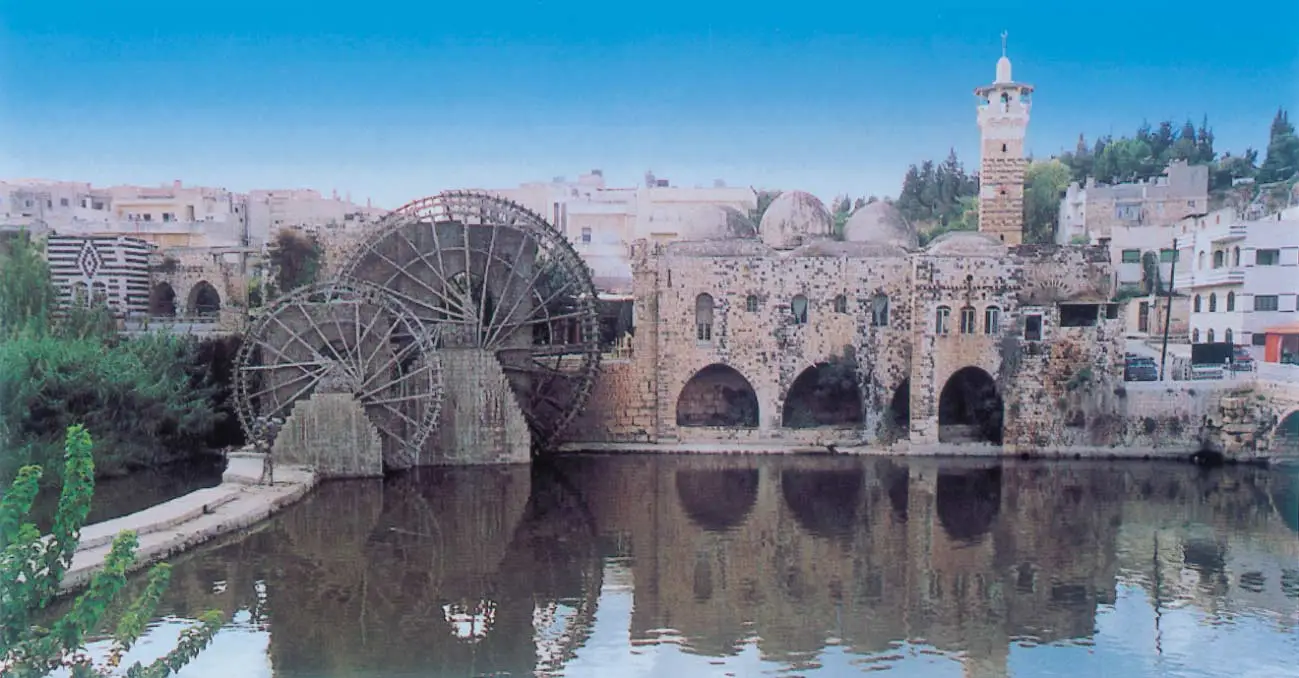
The mosque's minaret, domes and river façade beside the norias of Hama

Architectural Features

The square minaret stands in the northwest corner, built in alternating courses of black and white stone with simple geometric patterns. The prayer hall has a rectangular vaulted southern section and an eastern section covered by five domes of differing shapes, facing the river; its arches rest on square piers. The courtyard is centred on a large pool that was fed by the water of the Jabariyya noria, and is surrounded by arcades of stone arches. The northern door still stands, while the tall western gate has been demolished.

Features Worth a Closer Look

  • Inscriptions on the north wall

    A foundation inscription in large Arabic letters names Nur al-Din, his lineage and the date of construction. Beside it are an ancient Greek inscription praising the courage of Hama's people, and an Arabic one showing the mosque was a centre for study circles.

  • The wooden minbar

    A minbar of carved ebony with floral and geometric ornament and verses from Surat al-Furqan. The original is kept in the Hama Museum; a close copy stands in the mosque today.

  • Courtyard and pool

    An open courtyard centred on a large pool once fed by the Jabariyya noria, surrounded by arcades of stone arches.

  • In the heart of old Hama

    In the Bab al-Naoura quarter on the Orontes, beside the Nuri Bimaristan, the Jabariyya norias and the Hama citadel.

Through the centuries

Milestones in the Mosque's History

Key moments in the life of the mosque since its foundation.

  1. 1157

    A great earthquake strikes Hama; Nur al-Din restores what was damaged.

  2. 1162–1163

    The mosque is built under Nur al-Din Mahmoud Zengi; the foundation inscription gives 558 AH (sources cite 1162 or 1163).

  3. 1164

    The carved wooden minbar is made (559 AH), and Nur al-Din builds the Nuri Bimaristan beside the mosque.

  4. 14th c.

    The eastern section overlooking the river is added under Abu al-Fida.

  5. Today

    The mosque still stands with its minaret, courtyard and north door, welcoming worshippers and visitors in old Hama.

For worshippers and visitors

Prayer Times

Today's times for Hama. The mosque is open during prayer times.

Loading prayer times…

Next prayer

—

  • Fajr

    --:--

  • Sunrise

    --:--

  • Dhuhr

    --:--

  • Asr

    --:--

  • Maghrib

    --:--

  • Isha

    --:--

Plan your visit

Visiting the Mosque

Everything you need to reach the mosque and visit respectfully.

Address

Al-Kilaniyya Bridge, west bank of the Orontes, near Hama Citadel, Syria

Visiting hours

Open during prayer times. Best explored between prayers.

Visitor etiquette

  • Wear modest clothing; women are asked to cover their hair.
  • Remove your shoes before entering the prayer hall.
  • Keep quiet and be respectful of worshippers.
  • Ask before photographing people.
Open in Google Maps